
What is Occupational Therapy?
What is OT and how can we help?
By: Elizabeth Binckes, MS, OTR/L, CSRS, CNS
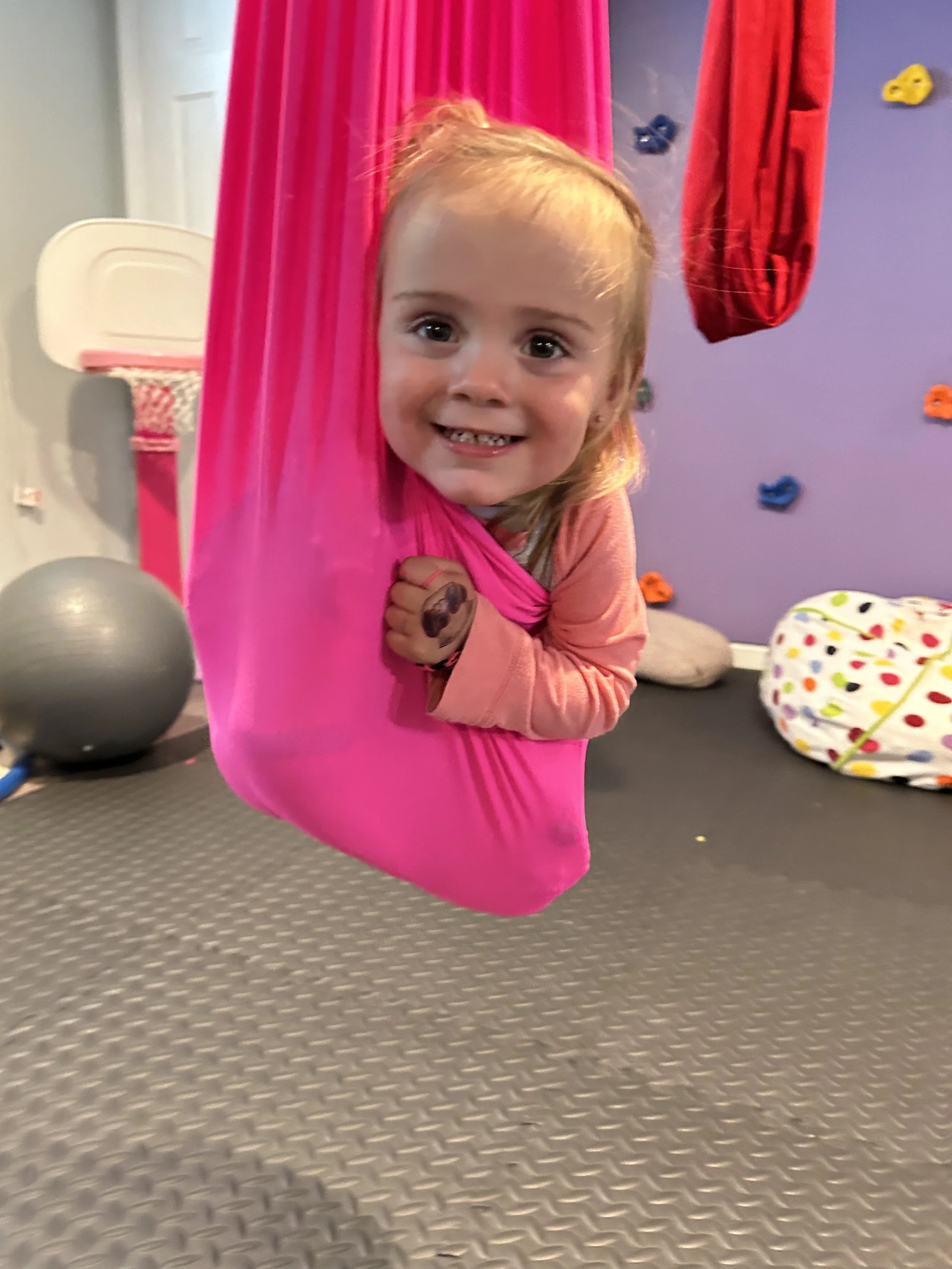
A kiddo enjoying some vestibular input in a lycra swing in the clinic
Occupational therapy facilitates participation in daily living.
What is an occupation?
An occupation is anything that occupies your time. It includes the things that fill you or your child’s day! Occupations are broken down into 8 categories and OT can help with all of them:
Activities of daily living -taking care of one’s own body. For example: bathing, showering, dressing, hygiene.
Instrumental activities of daily living – things that support daily life. Things like caring for pets, communication, driving and mobility, home management (yard work/chores/meal prep).
Health Management- developing, managing, and maintaining routines for health and wellness. This area allows us to participate in other occupations. For example, having a hygiene routine so I can go to school.
Rest and sleep- rest, sleep preparation, and sleep participation.
Education- activities needed for learning and participating in the educational environment
Work- employment, job performance, volunteer exploration and participation
Play- play exploration and participation
Social Participation
In OT, when we meet you and your child for the first time we will complete an evaluation focused on the whole child. You may have brought your child here because they struggle with handwriting, riding a bike, sitting still for mealtime, or emotionbal outbusts but we will look at all areas of function to produce a full picture of your child’s strengths and areas for growth.
Where does Sensory Processing fit in?
The short answer is EVERYWHERE. Discussing and addressing sensory processing is part of a holistic occupational therapy program.
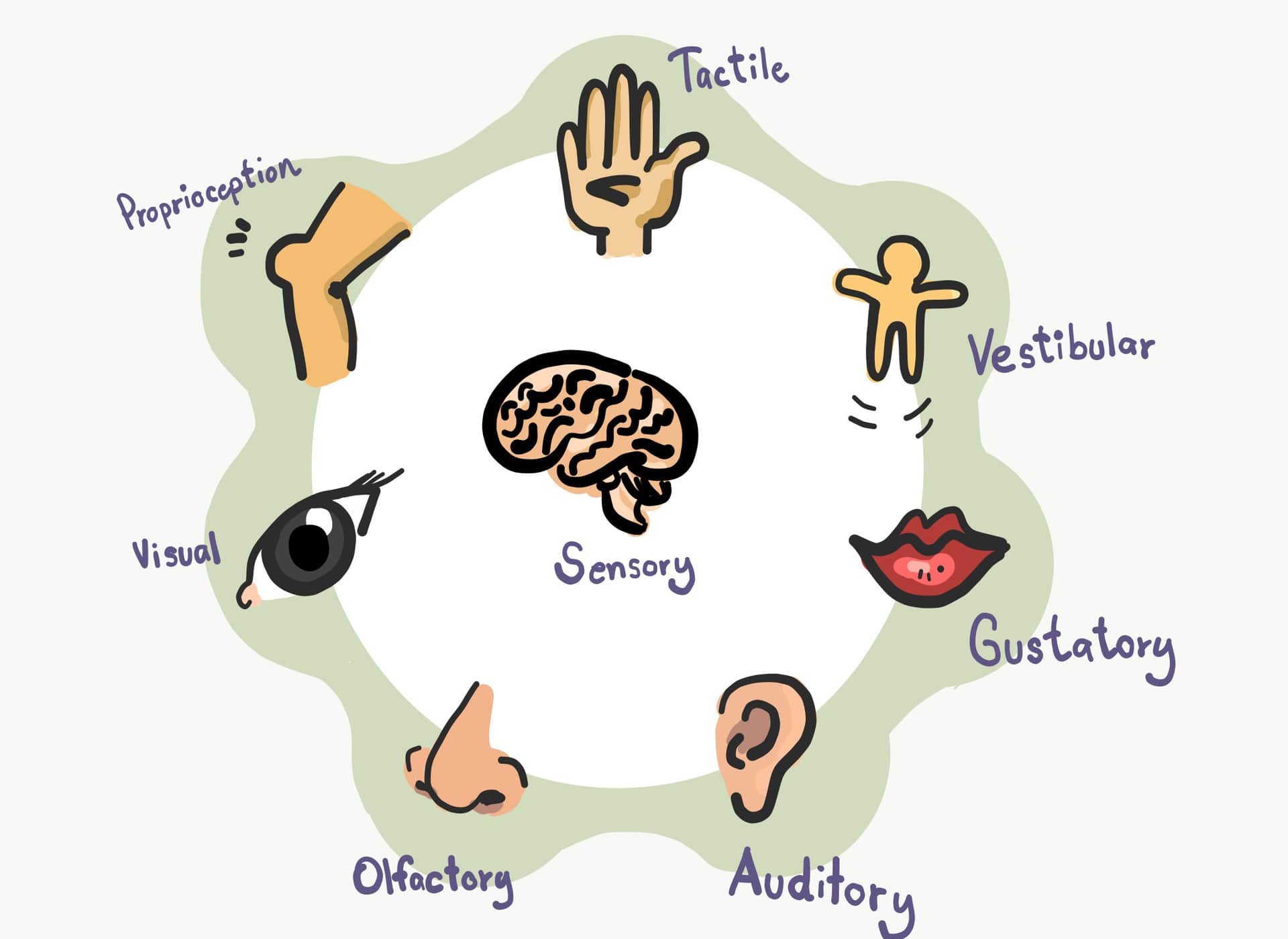
Sensory processing refers to the process of taking information from our senses and turning it into a response which allows us to interact with our environment. It is a neurological process (it happens in the brain!). We have 8 sensory systems: auditory, visual, olfactory (smell), gustatory (taste), tactile (touch), vestibular, proprioceptive, and interoceptive. Individuals with sensory processing difficulties are often receiving jumbled information from their environment. If your nervous system were a highway, sensory processing difficulties would be rush hour traffic or grid lock near times square on New Years Eve.
If your body is taking in jumbled information, you are going to feel jumbled! This may look like fidgeting, bouncing, “bull in a china shop” behavior or even meltdowns and tantrums. On the other end this may also look like lethargy, lack of interest, and difficulty focusing. If your child feels jumbled, it is often referred to as a dysregulated state; this just means that their sensory systems are out of balance.
How does OT help?
Sensory processing is the foundation to higher level skill building. Your OT will use therapeutic activities to help your child achieve an optimal arousal level or a more regulated state (i.e. no jumbling/no grid lock traffic) then work on skill building. This will include finding the right combination of sensory inputs to help with the “flow of traffic” in their brain throughout the day.
Many adults make adjustments to sensory inputs throughout their day without even realizing- likely for you these adjustments are made with little awareness. For example, you are leaving work after a busy day and driving home with no music. Your central nervous system had met its auditory threshold and needed the quiet time to decompress. Imagine your child has met their auditory threshold during the school day and now has to ride the bus home- there is no mute button and now they are jumbled! Many kiddos with sensory processing difficulties also struggle with self-awareness. They can’t adjust and use these tools on their own because they don’t know them yet. Collaboration between caregiver, child, OT is key!
What does intervention focus on?
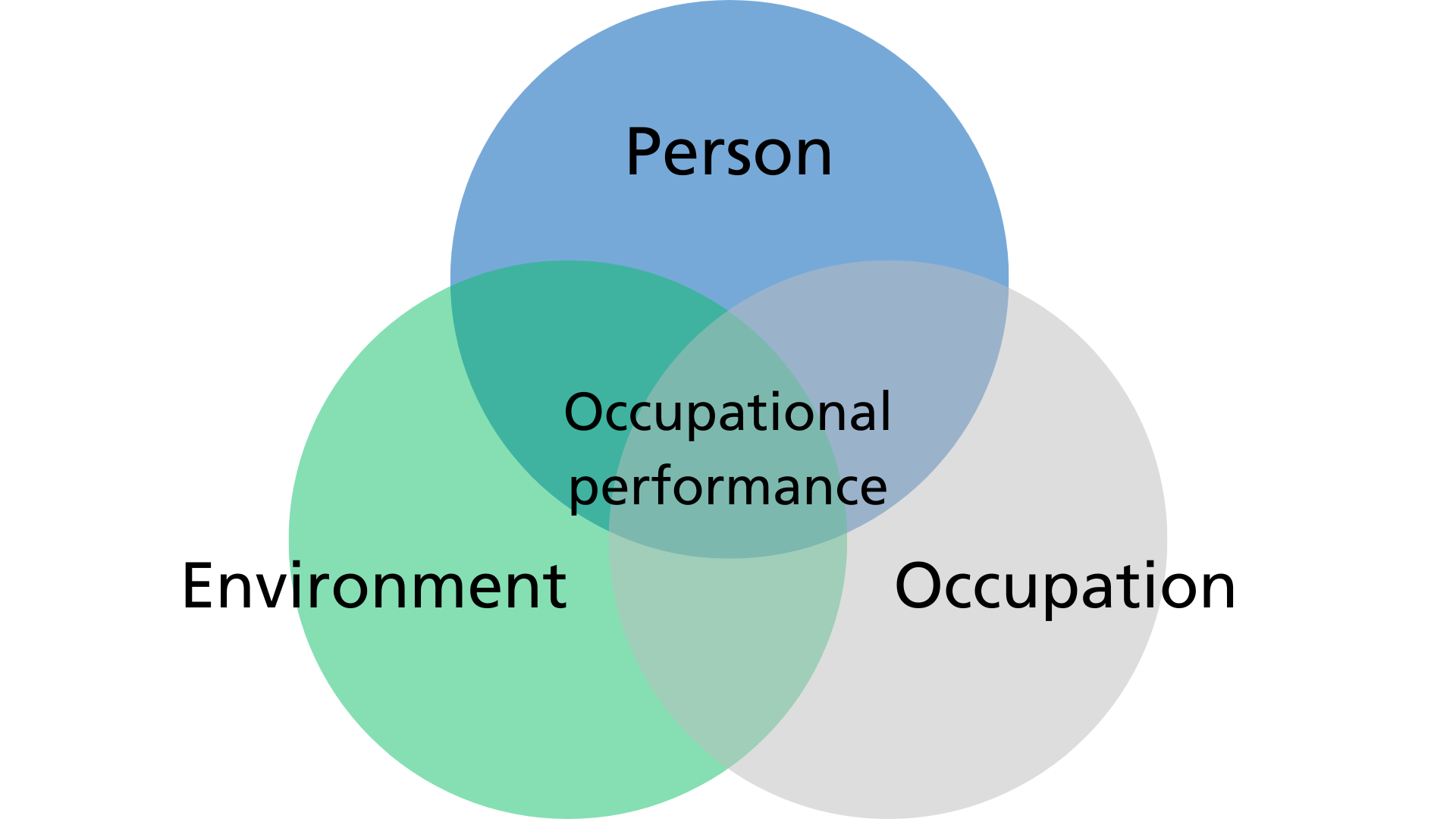
OT will look different for every person, because it is individualized. Occupational performance (the things you do) are the product of the person, the environment, and the occupation/task itself.
We will always work to improve your child’s skills and abilities (person), collaborate with you to adapt the contexts they work and play in (environment), and change the task as needed (occupation). For example, if your child is scared of or can’t tolerate loud noises, we will work to retrain their central nervous system to tolerate those sounds but we may also recommend using headphones or sitting near the door during assemblies and participating in other calming strategies before attending a loud birthday party.